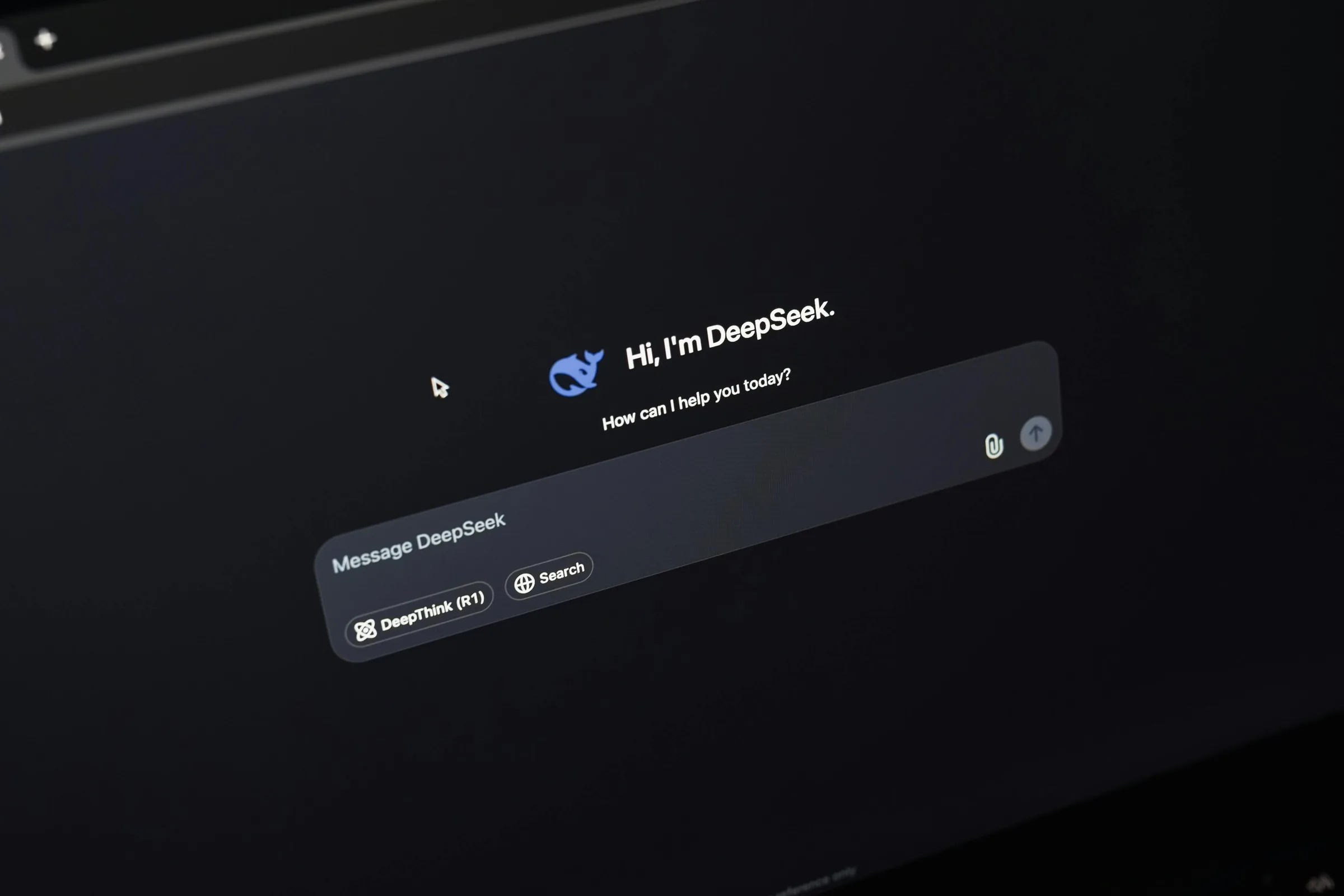
DeepSeek for administrative work in Samoa
DeepSeek-V4 Preview is officially live, and ARLO+ is treating that release as a practical option for administrative work, drafting, grammar checks, and client chatbot builds. The company says it is using DeepSeek because it is cost effective and capable, which matters for teams in Samoa and across the Pacific that want to do more in-house without waiting on offshore support.
For many businesses, the daily work is repetitive. Emails need cleaning up, proposals need first drafts, product descriptions need rewriting, and support replies need structure. A model that can handle those tasks at lower cost gives small teams more room to move.
Why cost matters in Pacific businesses
ARLO+ says it has already reduced dependence on developers in India or China for some projects by building more locally. That shift matters because every outsourced task adds time, communication overhead, and cost. For Pacific businesses, those frictions can slow down even simple work.
DeepSeek-V4 Preview is presented by DeepSeek as a cost-effective model with a 1M context length by default across official services. According to DeepSeek's 26 April 2024 news update, the release includes DeepSeek-V4-Pro and DeepSeek-V4-Flash, with the Flash model positioned as the faster and more economical option.
That matters for administrative use. If a business is drafting policy notes, cleaning up meeting minutes, or preparing customer messages, it usually doesn't need the most expensive model available. It needs a tool that is fast enough, accurate enough, and affordable enough to use every day.
What DeepSeek-V4 Preview adds
According to DeepSeek, DeepSeek-V4-Pro has 1.6T total parameters with 49B active parameters, while DeepSeek-V4-Flash has 284B total parameters with 13B active parameters. DeepSeek says V4-Pro rivals top closed-source models, while V4-Flash is designed for speed and lower API cost.
The update also says V4-Pro has enhanced agentic capabilities, strong reasoning in math, STEM and coding, and leading performance among open models in agentic coding benchmarks. DeepSeek describes V4-Flash as close to V4-Pro on reasoning for simpler agent tasks.
For a business user, that translates into a few practical uses:
- drafting internal memos and client messages
- rewriting rough notes into clear business English
- checking grammar and tone before sending documents
- generating first-pass product or service descriptions
- supporting chatbot responses for e-commerce enquiries
- helping staff build small internal tools through vibe coding
Vibe coding and local capability
ARLO+ says it is seeing more value in vibe coding, where staff use AI tools to build working scripts, small apps, and internal utilities without needing a full external development team. That approach can suit Pacific teams that want to move quickly on practical problems.
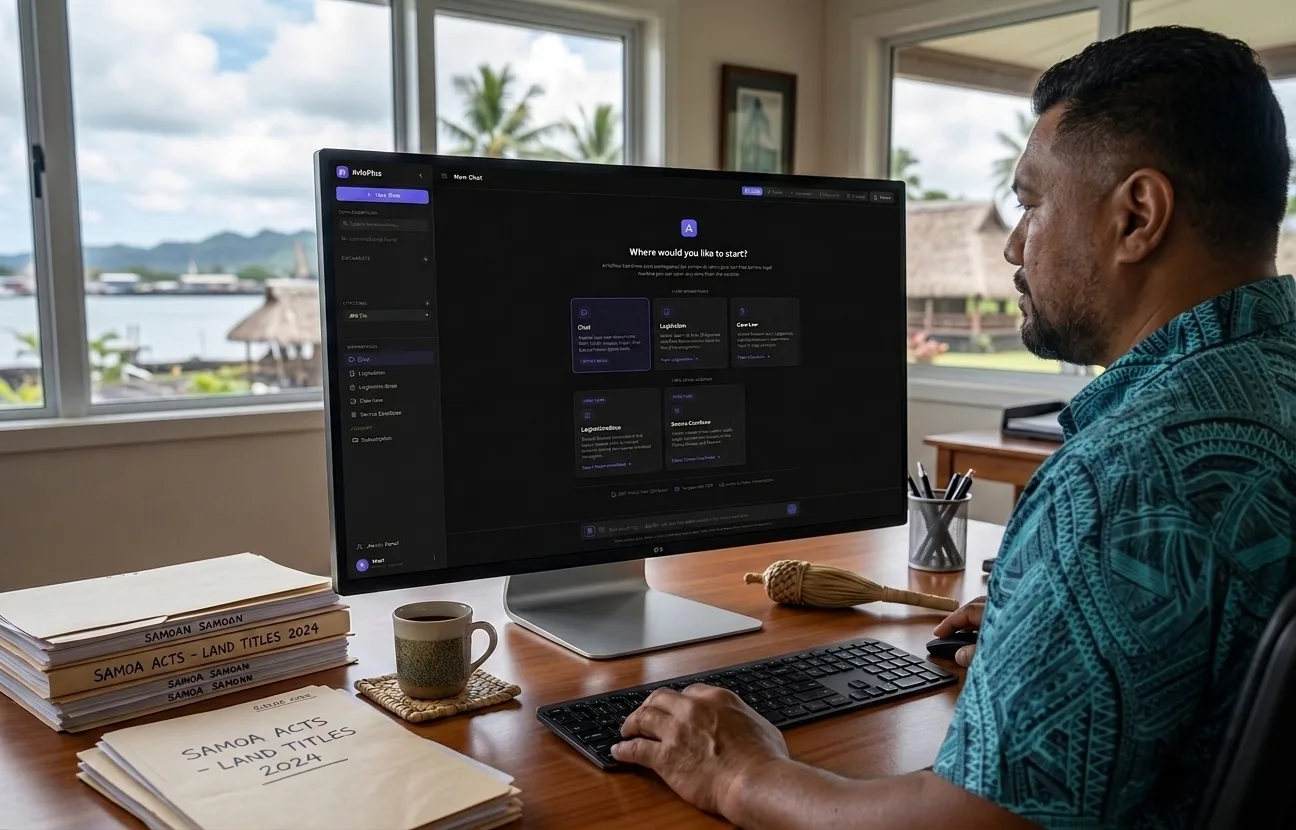
A staff member in Samoa can now prototype a booking form, a customer reply assistant, or a simple inventory tool with AI support, then refine it locally. That does not remove the need for technical skill. It changes where the skill sits. More of it can stay in the region.
That shift is already changing how people learn. Many training courses stop at chatbot use, such as asking ChatGPT for text generation or basic answers. Vibe coding goes further, because it helps users build tools rather than only consume answers.
Why ARLO+ still uses OpenAI and Claude in some cases
ARLO+ says it still uses OpenAI and Claude for legal platform work where trust, privacy, and confidence matter more than cost alone. That is a practical position, not a contradiction.
Different tasks need different models. An administrative draft may be fine in one system, while legal or sensitive work may need a model or setup that better fits the organisation's privacy requirements. Businesses in Samoa and the Pacific should treat model choice as a task-by-task decision, not a brand loyalty test.
A sensible internal rule is simple:
- Use the lowest-cost model that can do the job properly.
- Move to a stronger model if the task involves sensitive data, legal review, or higher accuracy requirements.
- Keep human review in the loop before anything goes to a client, customer, or regulator.
What the 1M context means for real work
DeepSeek says 1M context is now the default across official services, and that both V4-Pro and V4-Flash support dual modes, Thinking and Non-Thinking. The company also says the API supports OpenAI ChatCompletions and Anthropic APIs.
For teams, long context can help with tasks that rely on large documents, such as policy packs, support histories, contract drafts, or product catalogues. Instead of splitting the work into many smaller prompts, staff can keep more material in one place.
That can save time, but it still needs discipline. Long context is useful only if the input is clean. If the source material is messy, the output will be too.
Privacy, trust and local use in Samoa
ARLO+ is right to keep privacy in view. For businesses in Samoa, Tonga, and wider Pacific markets, AI adoption cannot be separated from data handling. Customer records, legal files, payroll details, and health-related information need proper controls.
That means businesses should ask a few direct questions before choosing a model:
- Where is the data processed?
- What information is stored?
- Who can access the prompts and outputs?
- Can sensitive fields be removed before submission?
- Does the task need a local review before use?
Those checks are especially important for legal services, public sector work, and any business handling personal data. Cost savings are useful, but they don't replace responsible handling.
Why this matters for the Pacific
ARLO+ describes this moment as one where Pacific people can do more locally, with fewer barriers that once pushed technical work offshore. That view fits the way AI is being used here: not as a novelty, but as a practical tool for productivity.
For Samoa and the Pacific, the real gain is not that AI can write text. It can already do that. The gain is that small teams can now draft faster, build internal tools sooner, and test ideas without waiting for large budgets or overseas developers.
DeepSeek-V4 Preview gives ARLO+ another option in that mix, especially for administrative work and chatbot development. OpenAI and Claude still have a place, particularly where privacy and trust matter more. The strongest setup is usually the one that matches the task, the risk, and the budget, then keeps a person in charge of the final decision.
Sources
- DeepSeek News Update, 26 April 2024, "DeepSeek-V4 Preview Release": https://api-docs.deepseek.com/news/news260424
- DeepSeek-V4-Pro technical report: https://huggingface.co/deepseek-ai/DeepSeek-V4-Pro/blob/main/DeepSeek_V4.pdf
- DeepSeek-V4 open weights collection: https://huggingface.co/collections/deepseek-ai/deepseek-v4
- DeepSeek chat access and API guidance: https://chat.deepseek.com/
- DeepSeek thinking mode guide: https://api-docs.deepseek.com/guides/thinking_mode