AI is no longer a distant workplace trend
Artificial intelligence is moving from experimental projects into everyday business decisions, and its effects are already being felt across the labour market. According to ABC News, major technology firms have begun reducing staff while investing heavily in AI tools that can complete tasks once done by entry-level professionals and specialist teams.
For readers in Samoa and across the Pacific, this matters for more than just global headlines. AI is now influencing how organisations hire, train, manage and measure work. That includes private companies, government agencies, schools, universities, and small businesses looking for practical ways to do more with limited resources.
The key point is not that AI will replace every job. Rather, it is changing which tasks are valuable, which roles are under pressure, and which skills are becoming essential.
What the ABC analysis highlights
ABC News reports that the global AI investment race has accelerated, with large sums flowing into development. Yet, despite the scale of that spending, many organisations are still struggling to convert AI pilots into measurable financial gains. A Stanford University Digital Economy Lab paper cited in the article found that most AI pilot programmes have not produced clear financial impact.
That does not mean the technology is failing. Instead, it suggests a familiar pattern: new tools often arrive faster than organisations can adapt their systems, workflows and expectations.
The article also notes that early-career workers are among the first to feel the pressure. In AI-exposed occupations, employment for younger workers has reportedly declined more sharply than for older, more experienced staff. In practical terms, this is one of the most important signals for employers and educators alike.
Why entry-level jobs are under pressure
One of the most significant shifts described in the source material is the effect on junior roles. In many industries, entry-level staff traditionally handled repetitive tasks such as:
- drafting routine documents
- preparing summaries and reports
- basic coding or testing
- customer service responses
- data entry and administrative support
AI tools can now perform many of these tasks quickly, which changes how businesses think about recruitment. Instead of hiring large numbers of junior staff to complete routine work, some organisations are using AI to reduce costs or speed up delivery.
This creates a challenge for the next generation of workers. If the traditional first rung on the career ladder becomes narrower, young professionals may find it harder to gain the experience needed for more senior roles later on.
For Samoa and the Pacific, this is especially relevant in sectors where graduates often begin in administrative, clerical or support positions before moving into management, policy, finance or technical work.
What this means for businesses in Samoa and the Pacific
For local businesses, the lesson is not to fear AI, but to use it carefully and strategically. The article shows that large companies are already restructuring around AI capabilities, but the benefits are not automatic. Success depends on how well the organisation integrates the technology into real workflows.
Businesses in Samoa and the wider Pacific can take several practical steps:
- Identify repetitive tasks first
- Start with work that is time-consuming but low risk, such as document drafting, meeting summaries or internal FAQs.
- Use AI to support staff, not simply replace them
- The most effective use of AI often combines machine speed with human judgement.
- Review quality and accountability
- AI output still needs checking, particularly for legal, financial, educational or public-facing content.
- Invest in staff training
- Workers need to know how to prompt, verify and edit AI-generated content responsibly.
- Measure outcomes, not novelty
- A tool is only useful if it improves service, saves time or reduces error.
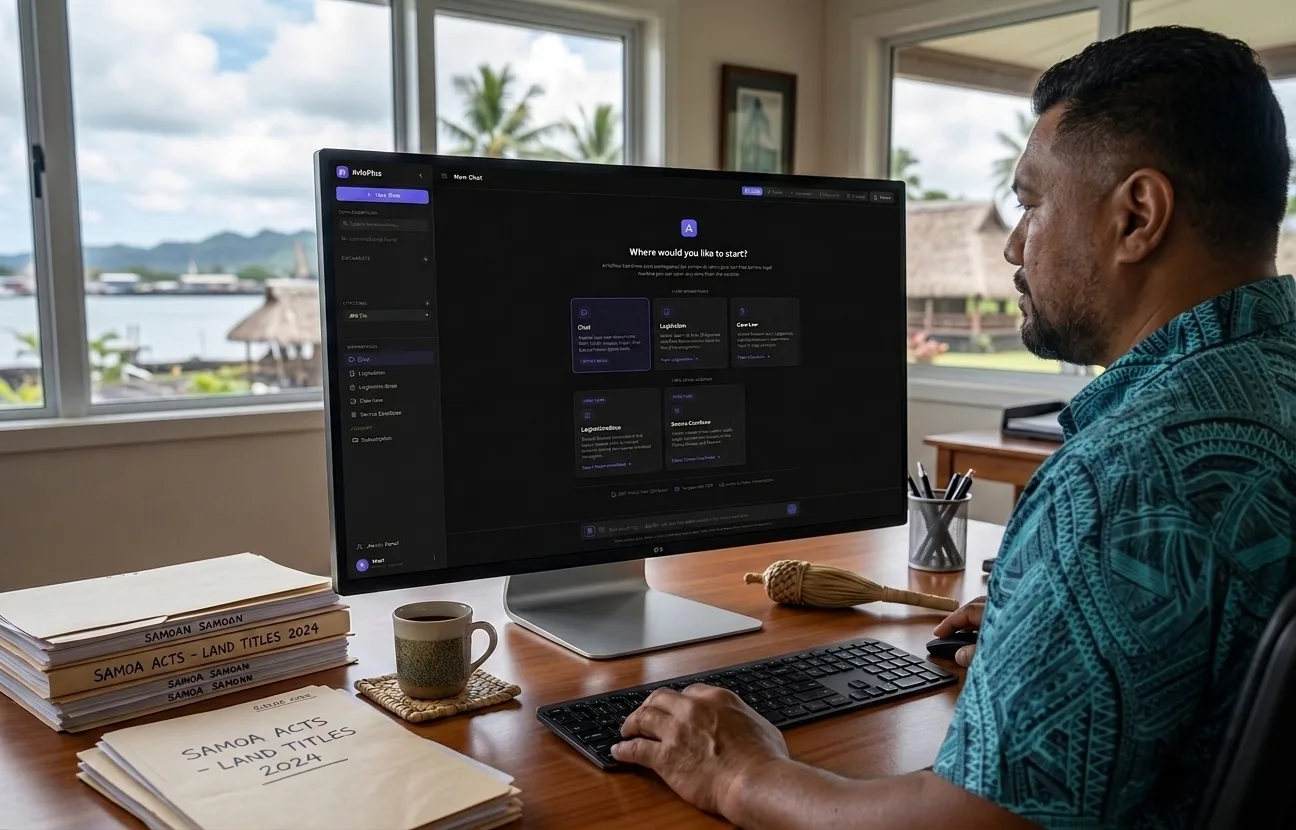
For small and medium-sized enterprises, the opportunity is to improve productivity without adding unnecessary complexity. That is where platforms such as ARLO+ can help: giving local users access to AI support designed for Pacific contexts, rather than relying only on generic global tools.
The impact on government, education and public services
The source article raises a broader question about how societies respond when technology begins to reshape work itself. That question is highly relevant for governments and education providers.
Government agencies
Public sector teams often deal with large volumes of correspondence, policy drafting, records management and citizen support. AI may help streamline some of these functions, but it also introduces risks around accuracy, privacy and fairness.
Agencies should consider:
- clear guidance on acceptable AI use
- data protection and confidentiality rules
- human review for all important decisions
- training for staff who use AI in daily work
Schools and tertiary institutions
Education providers face a dual challenge: preparing students for an AI-enabled workplace while also maintaining academic integrity.
That means teaching:
- critical thinking and verification skills
- how to use AI as a learning aid
- ethical use of generated content
- digital literacy for future employment
If AI reduces the number of routine entry-level tasks, then education systems may need to place even greater emphasis on communication, judgement, collaboration and adaptability.
How workers can prepare for the change
The ABC analysis suggests that the labour market disruption from AI is no longer hypothetical. For workers across Samoa and the Pacific, the safest approach is to build skills that complement AI rather than compete with it directly.
Useful areas of focus include:
- digital literacy: understanding how AI tools work and where they fail
- prompting and editing: learning how to guide AI effectively
- domain expertise: combining technical use with sector knowledge
- human skills: leadership, negotiation, empathy and problem-solving
- continuous learning: staying open to retraining as roles evolve
Workers do not need to become AI engineers to remain relevant. But they do need to understand how AI is changing the expectations of employers and clients.
A balanced view: disruption, not inevitability
It is easy to assume that AI will create a simple story of job losses. The reality is more nuanced. As the ABC report notes, economists such as Michele Bullock have argued that technological change has always reshaped labour markets, with some jobs disappearing, some being redefined and others being created.
That pattern is likely to continue. However, the difference this time is that AI can affect not only manual tasks, but also analytical, administrative and creative work. That makes the transition more complex.
For Samoa and the Pacific, the most practical response is to focus on readiness:
- build digital capability early
- encourage responsible adoption
- support workers through retraining
- design AI policies that protect people as well as productivity
The organisations that benefit most from AI are likely to be those that combine technology with good management, clear rules and a strong understanding of local needs.
AI is already changing the shape of work. The question for Samoa and the Pacific is not whether that change will arrive, but how quickly businesses, schools and public institutions will adapt to it.