AI in Samoa: What It Means for Daily Life and Work
Artificial intelligence, or AI, is increasingly part of everyday digital tools, from search engines and translation apps to customer service chatbots and writing assistants. For Samoa, the conversation is not only about future technology, but also about how people, businesses and institutions can use AI in practical, responsible ways today.
Across the Pacific, AI is being discussed as a tool that can improve productivity, reduce repetitive work and support better decision-making. In Samoa, that potential is especially relevant for organisations working with limited time, small teams and growing digital expectations. At the same time, AI should be approached with care: it is a support tool, not a replacement for human judgement, local knowledge or cultural context.
Why AI Matters for Samoa
Samoa’s economy and public services rely on clear communication, efficient administration and the ability to serve communities across islands and rural areas. AI can help in several areas where speed, consistency and access are important.
Some of the most immediate uses include:
- drafting emails, reports and notices more quickly
- summarising long documents and meeting notes
- translating or simplifying text for different audiences
- supporting customer enquiries through chat tools
- assisting with lesson preparation and study support
- organising information and helping with basic data analysis
For many users, the value of AI is not in replacing work, but in reducing the time spent on routine tasks. That can free up staff, teachers, students and business owners to focus on higher-value work that needs human insight.
Practical Uses for Businesses
Small and medium-sized businesses in Samoa may find AI useful in day-to-day operations, especially where teams are lean and staff often handle multiple roles.
Customer service and communication
AI tools can help businesses respond faster to common questions about opening hours, services, bookings and prices. A well-designed assistant can provide first-line support, while more complex issues are passed to a person.
Marketing and content creation
Businesses can use AI to draft social media posts, product descriptions and promotional messages. This can save time, but the content should always be reviewed to ensure it reflects the business accurately and sounds natural for Samoan audiences.
Administration and planning
AI can assist with:
- summarising invoices or documents
- drafting internal memos
- creating meeting agendas
- organising to-do lists and project plans
- analysing basic trends in sales or customer feedback
For businesses trading across Samoa and the wider Pacific, AI can also support faster communication with overseas partners, particularly when dealing with English-language documents and correspondence.
AI in Education and Training
Education is one of the most visible areas where AI is already making an impact. For teachers and students in Samoa, the opportunity lies in using AI as a learning aid rather than a shortcut.
For teachers
AI can help with:
- preparing lesson outlines and quiz questions
- creating differentiated materials for mixed-ability classes
- simplifying complex topics for younger learners
- generating draft rubrics or activity ideas
These uses can save preparation time, but teachers still need to check for accuracy, age suitability and alignment with the curriculum.
For students
Students can use AI to:
- explain concepts in simpler language
- practise writing and editing
- generate study questions
- organise research notes
- improve grammar and structure
However, students should be careful not to treat AI output as automatically correct. It is important to verify facts, understand the material and avoid submitting AI-generated work as if it were fully original.
Digital skills for the future
As AI becomes more common, digital literacy will matter more. That includes knowing how to ask good questions, assess responses critically and recognise when human review is needed. Building these skills early will help students prepare for modern workplaces in Samoa and beyond.
Opportunities for Government and Public Services
Government agencies can use AI to improve efficiency in administrative work and public communication, provided that privacy, accuracy and accountability are properly managed.
Possible applications include:
- helping staff search and summarise internal documents
- drafting public notices and service updates
- sorting routine enquiries before human follow-up
- supporting translation or plain-language communication
- analysing feedback from surveys or service channels
For public institutions, the main priority should be trust. Citizens need to know when AI is being used, how information is handled and where human oversight remains in place. Clear policies can help avoid confusion and reduce the risk of errors.
Risks and Limitations to Keep in Mind
AI is useful, but it is not perfect. Users in Samoa should be aware of several limitations.
Accuracy
AI systems can produce confident but incorrect answers. This is especially important when dealing with legal, financial, medical or technical information.
Bias and context
AI tools are trained on large amounts of data and may not always understand local realities, cultural references or Pacific-specific needs. Human review is essential when content must be appropriate for Samoan audiences.
Privacy and security
Users should avoid entering sensitive personal, business or government information into tools unless they are confident about how that data is stored and used. This matters for both organisations and individuals.
Over-reliance
If used too heavily, AI can weaken critical thinking and reduce the quality of work. The best approach is to use AI as a helper, not as the final authority.
How to Use AI Responsibly in Samoa
A practical approach will help individuals and organisations get value from AI without creating unnecessary risk.
Good practices for everyday users
- check facts before sharing or publishing AI-generated content
- edit outputs so they suit local tone and purpose
- avoid sharing confidential information unnecessarily
- use AI for support, not as a substitute for judgement
- ask for sources or explanations where appropriate
Good practices for organisations
- create simple internal rules for AI use
- decide which tasks are suitable and which are not
- train staff to review outputs carefully
- protect sensitive data and customer information
- keep a person responsible for final approval
For schools, businesses and public agencies, a phased approach is often best. Start with low-risk uses such as drafting, summarising and brainstorming, then expand only when staff are confident and safeguards are in place.
What AI Could Mean for the Pacific Region
Samoa is part of a wider Pacific conversation about digital inclusion, resilience and sustainable development. AI may help the region improve access to information, reduce administrative burden and support local innovation.
At the same time, Pacific communities need solutions that reflect local languages, values and service needs. That means AI adoption should not simply copy models from larger markets. It should be shaped by the realities of island life, limited resources and the importance of community trust.
For that reason, the most useful AI tools for Samoa will likely be those that are simple, affordable and easy to adapt. The aim should be to strengthen people’s work, not replace the human relationships that underpin business, education and public service.
A Practical Way Forward
AI in Samoa is best understood as a tool with real promise and real limits. It can help people work faster, learn more effectively and manage information with greater ease. But its value depends on how responsibly it is used.
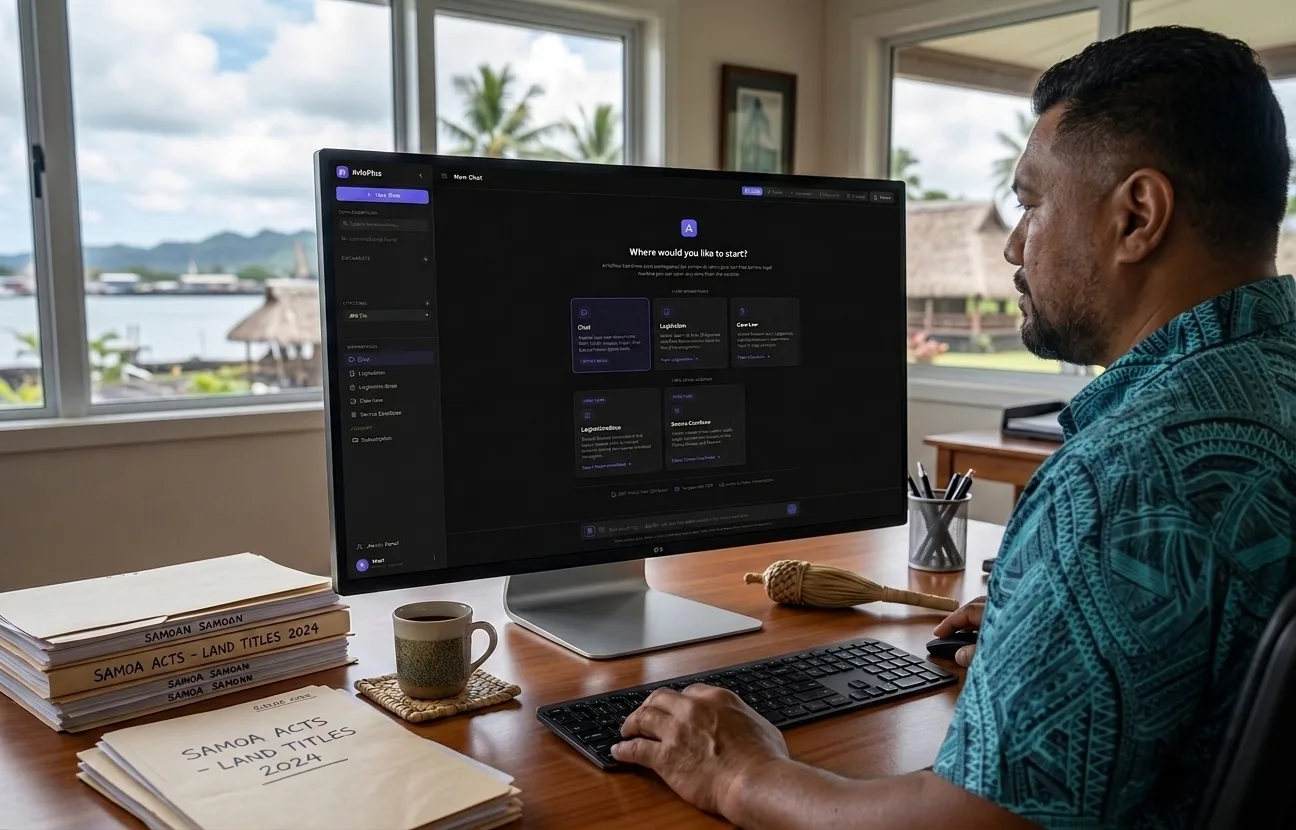
For ARLO+ users, the opportunity is to experiment thoughtfully: start with everyday tasks, review results carefully and build confidence over time. Whether you are a business owner, teacher, student, public servant or home user, AI can be useful when it is guided by human judgement and local understanding.
If Samoa’s digital future is to be both practical and inclusive, AI will need to be adopted in a way that supports people first.